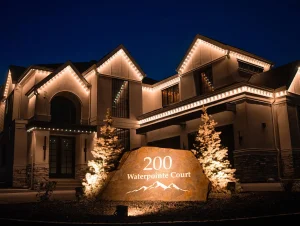
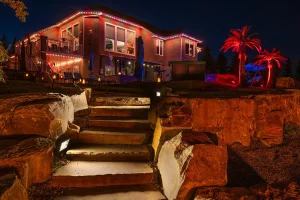
Most homeowners in Omaha spend thousands on landscaping, then let it disappear the moment the sun sets. A well-designed landscape lighting system changes that completely. It extends the beauty of your yard into the evening, adds a layer of security, and can meaningfully increase your home’s curb appeal. If you have ever wondered where to start, this guide walks you through everything you need to know.
- Why Landscape Lighting Matters for Omaha Homes
- Types of Landscape Lighting Fixtures
- Designing Your Landscape Lighting System
- Professional vs. DIY Installation
- What Affects the Cost
- Ready to Light Up Your Yard?
- Frequently Asked Questions
Why Landscape Lighting Matters for Omaha Homes
Omaha evenings can be stunning, especially during spring and fall when you actually want to be outside. Good landscape lighting lets you enjoy your yard after dark, whether that means hosting a backyard dinner or simply relaxing on the patio. Beyond enjoyment, a lit exterior signals an occupied, cared-for home, which is a genuine deterrent to opportunistic crime.
There is also a financial case to be made. Strong curb appeal, including exterior lighting, is widely considered to help homes sell faster and for more. Landscape lighting is one of the few upgrades that pays you back both while you live in the home and when you sell it. Paired with a broader outdoor lighting plan, it creates a cohesive look that feels intentional rather than piecemeal.
For Omaha homeowners specifically, the wide lots and mature trees common in many neighborhoods create natural opportunities for dramatic uplighting and path lighting. The key is working with your yard’s existing features rather than fighting them.
Types of Landscape Lighting Fixtures
Understanding the main fixture categories makes it much easier to communicate what you want and evaluate proposals. Each type serves a distinct purpose, and most finished systems use a combination of several.
- Uplights: Installed at ground level and aimed upward, these are ideal for trees, architectural features, and large shrubs. They create drama and depth.
- Path lights: Low-profile fixtures that line walkways and driveways. They guide foot traffic and add a warm, welcoming glow.
- Spotlights: Narrow-beam fixtures for highlighting a specific focal point, like a sculpture, water feature, or statement plant.
- Flood lights: Wide-beam fixtures that wash a large area with light, useful for open lawn sections or the broad face of a home.
- Well lights: Recessed into the ground for a clean, unobtrusive look. Great for uplighting trees without visible hardware.
- Step and deck lights: Mounted into risers or deck boards to illuminate transitions safely and attractively.
Most professional landscape lighting systems today use LED technology. LEDs consume far less energy than older halogen fixtures, last dramatically longer, and produce very little heat. The upfront cost is slightly higher, but the operating savings over time make LEDs the clear choice for any new installation.
Designing Your Landscape Lighting System
A great design starts with a walk around your property at night. Look at what is already visible from the street and what disappears into shadow. Note your focal points, the areas where people walk, and any hazards like steps or uneven ground. That nighttime walk gives you a realistic baseline that daytime planning cannot replicate.
From there, think in layers. Start with safety and function: path lights, step lights, and any areas that need visibility for security. Then add accent and drama: uplights on your best trees, spotlights on architectural details, and perhaps some soft wash lighting along garden beds. Layering means no single fixture type dominates, and the result feels balanced rather than blinding.
Color temperature matters more than most homeowners realize. A warm white, around 2700K to 3000K, suits most residential landscapes because it feels inviting and flatters plants and stone. Cooler whites above 4000K can feel harsh in a residential setting, though they work well for modern architectural homes. Keep your color temperature consistent across the yard to avoid a mismatched effect.
Professional vs. DIY Installation
Low-voltage landscape lighting is often marketed as a weekend DIY project, and for a simple path light kit, that description is fair. But there is a significant gap between a few stake lights from a home improvement store and a designed, transformer-balanced system that looks polished and lasts for years.
Professional installers handle load calculations so your transformer is never over- or under-driven. They bury wire at the correct depth, use weatherproof connectors, and position fixtures to avoid the hot spots and dark zones that plague self-installed systems. They also handle the geometry of aiming, which sounds simple but is genuinely difficult to get right without experience and the right tools.
We come to your home in Omaha, assess your yard in person, and design a system around your specific layout and goals. That site visit catches issues, like a tree root that would block a wire run, that no amount of planning from photos can reveal. For Omaha homeowners who want results that last, professional installation is almost always the better investment.
What Affects the Cost
Landscape lighting costs vary based on the size of your yard, the number of fixtures, wire run complexity, and the quality of components. A modest front-yard system with eight to twelve fixtures costs considerably less than a full-property design covering front yard, backyard, and hardscape features. Every yard is quoted individually after a site visit.
Our quotes reflect installed price, meaning design, materials, labor, and transformer. Ongoing operating costs are low with LED fixtures. A typical residential system costs just a few dollars per month to run, even if you leave it on a timer set for several hours each evening.
When you get a quote, look for itemized pricing that separates fixtures, transformer, wire, and labor. That transparency makes it easy to adjust the scope if needed without losing visibility into where the money goes. Also ask about warranty coverage on both fixtures and labor. Warranty terms vary by brand, so ask to see them in writing before you sign.
If you are bundling projects, ask about combining landscape lighting with holiday lighting in Omaha or soffit lighting for your roofline. Scheduling multiple services together often reduces mobilization costs and gives your home a finished look from every angle.
Ready to Light Up Your Yard?
Halo Custom Lighting serves Omaha homeowners with custom-designed landscape lighting systems built to last. We come to your home, assess your property in person, and put together a design that fits your yard and your budget. Whether you want a simple path lighting upgrade or a full-property system, we handle every detail from design through installation. Visit our landscape lighting service page to learn more, or reach out today to schedule your free on-site consultation.
Frequently Asked Questions
How many landscape lighting fixtures does a typical yard need?
Most residential front yards use between 8 and 20 fixtures, depending on size and complexity. A small, simple front yard might look great with 8 to 10 well-placed lights, while a large property with multiple trees, garden beds, and a long driveway could need 30 or more. A site visit gives you a much more accurate number than any rule of thumb.
How long does a professional landscape lighting installation take?
Most residential installations are completed in one day. A smaller system of 10 to 15 fixtures typically takes four to six hours. Larger full-property systems may run eight hours or span two days. Your installer should give you a time estimate before work begins so you can plan accordingly.
Is landscape lighting worth the investment for Omaha homeowners?
Yes, landscape lighting consistently delivers value through improved curb appeal, added security, and extended use of your outdoor spaces. Exterior lighting is widely considered one of the more visible and effective curb-appeal upgrades. For Omaha homeowners who spend money on landscaping, lighting protects that investment by making it visible year-round.
What is the difference between low-voltage and line-voltage landscape lighting?
Low-voltage systems run on 12 volts through a transformer and are the standard choice for residential landscape lighting. They are safer to install, less expensive to operate, and easier to modify or expand later. Line-voltage systems run at 120 volts and are typically reserved for commercial settings or specific high-power applications. Nearly all residential installations use low-voltage LED systems.
Can I add holiday lighting to an existing landscape lighting system?
Yes, in most cases holiday lighting runs on a separate circuit from your landscape lighting, so the two systems do not interfere with each other. Some homeowners also choose permanent holiday lights installed in the roofline, which sit ready all year and activate for any season or occasion. We can design both systems to complement each other visually.
How do I control my landscape lighting once it is installed?
Most modern systems use a programmable timer or photocell built into the transformer, so lights turn on at dusk and off at a set time automatically. Smart transformers can connect to a phone app for remote control and scheduling adjustments. We walk every customer through their control options during installation so you leave the first day knowing exactly how to run your system.